Wednesday, 12 October 2016

BOOKS: The Hidden Life of Trees by Peter Wohlleben


Unlike arborists, who care for significant trees in parks, gardens and public amenities, silviculturists look after the care and general health of commercial forests leading up to the time of harvest. Their skills are diverse but are informed by closely observing the changes in their arboreal charges, season by season, decade after decade.
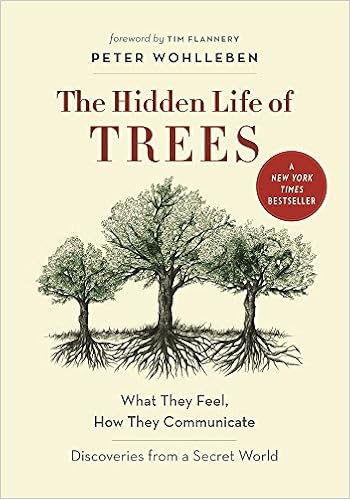

Image result for the hidden life of trees


Much has been written about the art of growing and caring for trees. It is not a new genre and authors have approached the subject in many different ways. The author of this book is a German silviculturist of thirty years standing, although he unpretentiously describes himself simply as a forester.

The Germans, in particular, have always had a close relationship with their trees and forests and this has imbued much of their national culture and identity. This book steers away from Romantic mythology and concentrates on what makes wild and cultivated forest trees and their ecosystems so dynamic and wonderful.


This could have been a dull work, but the author brings his subject alive with good writing. Although clearly acquainted with the latest academic research on trees and forest ecosystems, Wohlleben successfully treads the narrow path between accessible language and technically informed detail with apparent ease.

“I thank you, dear reader, for having explored some of the trees’ secrets with me – only people who understand trees are capable of protecting them.”

Image result for Peter Wohlleben
Peter Wohlleben

Through the close examination of the tree species under his long-time charge in Germany (mostly beeches, oaks and conifers), Wohlleben observes how trees like to grow in natural forests. We learn how they communicate with each other through their roots (the ‘wood wide web’), and how ‘mother trees’ deliberately slow the development of their progeny so they don’t grow too quickly. We discover that these young plants ultimately develop stronger trunks and root systems this way which in time help guarantee a long life.

The author compares the slow start of forest trees to the specimens planted by gardeners in urban settings. These pampered root pruned plants – Wohlleben calls them ‘street kids’ - often grow well initially but never reach the size, strength and longevity of many of their wild cousins. Much of the book examines the many reasons for this.

Ultimately, Wohlleben makes a provocative appeal for humans to break down the barriers between the kingdom of animals and plants. Acknowledging that in recent decades we have begun to treat animals with more respect and dignity, he argues that this should be extended to trees. 

While anyone with an interest in the natural world will enjoy this fine work I think arborists and horticulture students will especially benefit from reading it as it helps the planter and carer of urban trees better understand the frailties of growing trees divorced from their wild kin.

The Hidden Life of Trees by Peter Wohlleben. 
Black Inc, $29.00 Paperback ISBN: 9781863958738

This review, by Silas Clifford-Smith, was first published on the Gardendrum website

Saturday, 1 October 2016

BOOKS: The House and Garden at Glenmore

In 2002 Viking published The Garden at Bronte. It was a ground breaking book that tells of the restoration of Leo Schofield’s Victorian-era garden in Sydney’s Eastern Suburbs during the 1990s. Schofield’s delightfully written volume showed how he, and others, had researched the history of the heritage property and how this informed the design of the restored garden. As well as the focus on the grounds Schofield’s book included interior shots of the house which highlighted his exquisite taste for decorating.  Although similar books had been published overseas The Garden at Bronte was the first of its kind in Australia and helped kick start a sub-genre of works on heritage garden and house restoration.


In similar vein comes The House and Garden at Glenmore by the Sydney interior designer Mickey Robertson. Robertson’s subject is her 1850s sandstone home - on the southwestern edge of Sydney - which she purchased with her husband in the late 1980s. For those familiar with the restoration genre - think Kevin McCloud’s Grand Designs – we see the transformation of the house from a rundown country property into a tastefully restored property, in this case, decorated in what I call the ‘Heritage-Modern’ style. Heritage-Modern homes are airy and light (think butler’s sinks, lime washed walls, toile curtains and antique wooden furniture) and have all the modern conveniences (which you never see) but honour and embrace the age of the property.

This book is divided into several sections. It begins with a memoir on the history of Robertson’s involvement with the property and shows how she restored and recreated Glenmore. While this was informative I felt there was only minimal detail on the many difficulties of doing such a major project. Most of Kevin McCloud’s programmes focus on this problematic period as it not only entertains but informs us whether the end result was truly successful. It would also have been interesting knowing more about the history of the house, its occupants and local memories of the property.

The second section focuses on the author’s interior designs. She is clearly a designer with great taste (not too feminine) and her interiors work well with the house if you embrace the Heritage-Modern look. I particularly liked the colour schemes and the diverse and interesting textiles used throughout the house which made it look very livable.

The third section looks at the garden. Almost all the images show the grounds today and the end result is very much in the Gardens Illustrated style (heritage vegetables, jute, gum boots, bamboo canes and potted bulbs – you know the look). The area of Sydney where Glenmore is located gets light frosts, hot summers and below average rainfall. The owners should be commended for keeping these harsh conditions in mind as the garden was planted out.

Without doubt the most dramatic plantings are a group of mature glaucous grey Agave Americana planted at the front of the house. These slow growing majestic succulents were relocated from Denbigh, a nearby heritage property. It would have been great to see photos of the removal and replanting of these dramatic plants and some images of the gardeners at work. 

I’m sure this beautiful volume - with lovely photos by Daniel Shipp - will appeal to many who drool at the idea of owning and restoring an old house with land. I look forward to viewing the property one day and congratulating the owners in person on doing such a fine job.

The House and Garden at Glenmore by Mickey Robertson ISBN: 9781743365823
Hardback $59.99 RRP Murdoch Books

Saturday, 3 September 2016

Your Garden

I was saddened to hear the news that Your Garden magazine is going to fold. While it is disappointing to see any title go it is especially true of Your Garden which has the distinguished honour of being Australia's longest running gardening title. 


Your Garden was first published in 1947 under the editorship of Ernest E Lord. The 1940s, 50s and early 60s were the peak years of interest in gardening and with the post war housing boom and increased population the magazine prospered.  The title actively promoted the use of native plants in home gardens as well as growing orchids and other ornamentals. The publication was general in nature and reflected the diverse horticultural interests of amateur and professional gardeners.

The title had an impressive list of contributors during its lifetime, including (among others): Winifred Bristow, Phil Dudman, Rodger Elliot, Jean Galbraith, Kevin Heinze, Arno King, J N Rentoul and Arthur Swaby. As well as excellent articles Your Garden was attractive to look at and also included gardening themed cartoons - something unheard of in contemporary garden mags.


By the 1990s and the new century the magazine was in slow decline. The readership was ageing and the publishers made little attempt to appeal to younger readers. While Your Garden had seen off several other titles during its boom years it couldn't compete with new (and arguably) fresher journals such as Gardening Australia and Better Homes and Gardens which had companion TV shows.  In recent years the magazine has moved from being a monthly to a seasonal publication. I wish the current writers and production staff well.

Thursday, 1 September 2016

Sage Advice - Anne Wareham

"Gardening is boring. It is repetitious, repetitive and mind-blowingly boring, just like housework. All of it – sowing seeds, mowing, cutting hedges, potting up, propagating – is boring, and all of it requires doing over and over again. if there are enjoyable jobs they're mostly enjoyable for the result not the process."

Anne Wareham writing in The Bad Tempered Gardener (2011)


Anne Wareham (image courtesy telegraph.co.uk)

Tuesday, 2 August 2016

Lord Howe Island

Despite its immense size Australia has surprisingly few islands off its coastline when compared to other large landmasses. One of the most distinctive is Lord Howe Island, 580 km off the northern New South Wales coast. A small crescent-shaped volcanic remnant, the 9 km long island is dominated by the dramatic twin peaks of Mt Lidgbird (777 m) and Mt Gower (875 m).


The twin peaks of Mt Lidgbird and Mt Gower at the southern end of Lord Howe Island

Depending on the time of year Lord Howe is home to between 250 and 700 permanent residents and tourists as well as a diverse and distinctive range of flora and fauna. The island was first discovered in 1788 by the HMS Supply under the command of Lieutenant Henry Lidgbird Ball. This was the island's first human contact but permanent settlement did not begin until 1834.  The island is named after Richard Howe who was the First Admiral of the Royal Navy at the time of its discovery.

Flying into Lord Howe from the mainland is one of the most exciting air journeys you can ever do. After crossing over seemingly endless water you suddenly spot the island jutting out of the ocean. After a picturesque reconnaissance circuit the Qantas Dash 8 prop plane descends and comes to a dramatic halt on the tiny 900 metre runway in the middle of the island.


Qantas regularly flies to the island from Sydney and Brisbane

The flora of this small island is a mixture of native and exotic plants growing in a dramatic coastal setting. Unlike almost everywhere else in Australia you won’t find the usual types of dry sclerophyll flora here. Instead Lord Howe offers the visitor a cocktail of unique endemic vegetation (105 of the 243 species of natives on Lord Howe are limited to the island), South Pacific regional coastal flora and tough-as-old-boots international horticulture standards.

The most common endemic plant growing on the island is the kentia palm (Howea forsteriana) which is a grown as an elegant indoor plant internationally. They're everywhere, from formal plantations as well as wild in the fertile valleys of the uncultivated lower parts of the island. The kentia is just one of four indigenous palms found here. Other distinctive locals are the berrywood (Ochrosia elliptica), an attractive glossy leaf small tree and the wedding lily (Dietes robinsoniana).


The largest bloom of the genus, the wedding lily, Dietes robinsoniana, flowers in late winter and spring

Sadly, not all is perfect in paradise. The island would have been pristine when humans first arrived, but it did not take long for decay to set in. Goats and pigs were introduced as a food source and they soon went feral defoliating many plants. Not long after mice and cats turned up, and early last century black rats swam to the island from a beached ship. The rodents decimated thousands of native birds, insects and plants leading to mass extinctions and endangering the populations of many others.

While many of the animal pests have been removed or controlled the rats are a persistent problem. The small community and its administration – the Lord Howe Island Board – are evenly divided over what should be done to control them. Some conservationists want a one-off mass extermination of the rats by aerial bombing while many residents feel this is unnecessary and dangerous. In 2015 the islanders voted on the proposal in a referendum with the extermination option winning by a small majority.


Kikuyu grass is one of the most common weeds on the island

The introduction of kikuyu grass has also been disastrous for small birds and animals. When regularly mown this African pasture turf is ideal for a frost free warm temperate climate but when not trimmed it becomes a dense jungle undergrowth which is almost impenetrable to small birds and animals.Weeds such as bitou bush, cherry guava and asparagus are a major issue here too. Luckily there's no evidence of lantana and blackberry. 


Whether wild or cultivated the kentia palm is found
growing throughout much of the island


Lord Howe Island is not a backpacker’s destination as it's expensive. You have to have booked accommodation to visit, there's no camping, and the flight from Sydney, Port Macquarie and Brisbane is pricey. Fruit, vegetables, groceries and drinks are costly because everything comes to the island by ship or plane. So if you visit try to squirrel as many supplies into your luggage as possible. 

Despite its many problems, this World Heritage listed island remains a real paradise on earth. Every corner of the island is gorgeous and the locals are very friendly. Beach lovers will think they've died and gone to heaven, but so will enthusiasts of plants, birds and conservation.


words and images © Silas Clifford-Smith

Monday, 1 August 2016

Sage Advice - William Robinson

"One of the first things the lover of flower gardening should do is to get a clear idea of the distinction between gardening and botany. Gardening is an inexhaustible art; botany is a world science, and the great mistake is to consider gardening from the point of view of the botanist."

William Robinson, writing in the Preface of the 1934 edition of The English Flower Garden


Image of William Robinson courtesy of telegraph.co.uk

Thursday, 14 July 2016

Sage Advice - Margery Fish

"I could go on and on. But that is just what gardening is, going on and on. "

Margery Fish We Made a Garden (1956)


Related Posts Plugin for WordPress, Blogger...