Friday, 25 March 2022

Sage Advice - Derek Jarman

Derek Jarman
(image courtesy Wikipedia)
"The word paradise is derived from the ancient Persian - 'a green place'. Paradise haunts gardens, and some gardens are paradises. Mine is one of them. Others are like bad children - spoilt by their parents, over-watered and covered with noxious chemicals."

Derek Jarman (1942-94)
Film Director, Artist and Gardener

Wednesday, 8 July 2020

A thorny issue


Recently, I was impaled on the knuckle of my left hand by an old rose thorn. Not an unusual occurrence for a working gardener but this time the snag left a lingering soreness. Several days later my hand was severely swollen and I could barely move my middle fingers. Thinking potential blood poisoning, I went to see my doctor for help. After consultation I was prescribed an antibiotic and promptly began my treatment. Within three days my hand was feeling better and a week later I was back to normal.

Rose, by Jobo

While hardly the first time I had been stabbed by a rose this infection made me appreciate the joys of thornless roses as well as antibiotics.The biggest danger in having thorny roses is not when they are grown as bushes but when they are used as a climber near paths and high-traffic areas.


Although not totally thornless, Crépuscule  is the perfect choice for a moderate  growing climber to grow over an arch or fence . It has attractive red new growth and the flowers almost glow in late afternoon light
.
There are a number of thornless climbing roses which look great in warm temperate gardens. Who can go past the Banksia Roses for their thornless canes and robustness. Coming in white and golden forms this climber covers a large pergola with little effort. So mighty is this plant that one late 19th century specimen in Arizona is said to be the largest growing rose in the world. Its main flowering season is in spring but can spot flower during other times. 
Zéphirine Drouhin, is a moderate growing climber known for its vivid pink flowers and lovely fragrance.
From a distance Renae, looks more like a luxuriant climber than a rose. The plant has disease resistant soft pink repeat flowers and glossy green leaves and is suitable for growing over a shed or over a small pergola. Lovely fragrance. Another fine pink climber is China Doll, a fragrant rose that is almost always in flower in a warm temperate climate.
While not completly thornless the Tea Rose Crépuscule makes a lovely choice for growing along a fence or over an arch.

While researching this article I discovered that it was a wound given by a rose to the cheek of an English policeman at the beginning of World War Two that saw the first human trials with the wonder drug penicillin, an antibiotic first identified in the 1920s by Englishman Alexander Flemming (1881-1955). 

Australian- born scientist Howard Florey

In 1941 Albert Alexander scratched his face on a rose thorn. He was soon suffering from severe blood poisoning and was close to death. After an earlier successful experiment on mice the Oxford University research team led by Howard Florey (1898-1968) decided on a human trial and penicillin was administered to the patient. The policeman's temperature began to reduce and after five days he seemed to be on the road to recovery, but with the marked improvement of the patient and stocks of the new antibiotic being critically low the treatment was stopped. This neglect proved fatal and the patient soon died. This first experiment taught the scientists that antibiotic treatment, although effective, had to be followed for a full course. By late 1943 penicillin was being given to British soldiers in North Africa and soon became the first of many antibiotics which have saved millions of lives around the world.


Tuesday, 11 February 2020

The Black and White Garden


While doing research on several artists involved with the Bulletin I became aware that a small, but significant, number of their illustrations had garden related themes.  Later, I decided to explore some of these cartoons in an attempt to discover how gardens were perceived by Australian cartoonists, a group who like to be known as ‘black and white artists’. 

"I can't get him out of the house since he took up gardening."
1949 Bulletin joke block by Percy Lindsay

The Bulletin was one of Australia’s longest running publications and was in print from 1880 until 2008. During its early years the paper was proudly radical, racist, chauvinistic, nationalistic and republican. Its readership was diverse and the paper was extremely popular in rural areas where it became known as the ‘bushman’s bible’. From the early years of the 20th century the Bulletin became increasingly conservative and slowly moved its editorial gaze away from rural subjects towards the suburban values of the growing cities. In cartoon terms this meant an increasing focus on humour related to middle class leisure activities such as golf, motoring, shopping, dining, and of course, gardening.

‘If only the Joneses would try to keep up with US!’ 
1957 Bulletin joke block by R W Coulter  

Garden related cartoons were mostly seen in the paper from the end of the First World War up to the time the paper changed ownership to Sir Frank Packer in 1961. It can be no coincidence that this four decade period was also the time when the popularity of home gardening as a leisure pursuit was arguably at its peak.

A dominant theme in garden related cartoons was the labour disputes between married couples. A typical cartoon would show the man of the house labouring in the garden (sweat invariably pouring from his head) while his bossy wife would scornfully direct works from the comfort of the veranda. This sort of image would have appealed to the mainly male target audience of the weekly.

1960 joke block - artist unknown


Other popular subjects include the ignorance of new gardeners, adapting to technological change in the garden, conflict between owners and their garden staff, and the public’s interaction with statues in our public parks. Another surprising subject was the antipathy to the growing of cactus and succulents which followed the infestation of prickly pear around the country.

Ideas for jokes often came from Bulletin readers themselves, who would receive a small fee if their idea was used. Contributing artists were then commissioned by the paper’s art director. No Bulletin artists stand out as preferring to work with garden related subjects although the many images of Juan Endean and Percy Lindsay are noteworthy.  

The Bulletin was not the only publication to include such comic images. Other periodicals included them and the specialist gardening press occasionally included garden cartoons, although many were sourced from popular overseas artists such as Norman Thelwell whose work was often reproduced in Your Garden.

Jokeblock by English cartoonist Norman Thelwell
published in Your Garden in 1960

By the late 1970s jocular cartoon images of gardens disappeared from the printed page. Hopefully the tide of garden ‘good taste’ will turn and like the increasing respect given to political cartooning we will see a return to seeing comic imagery in our gardening periodicals.

An updated version of this article was published in the October-December 2012 issue of Australian Garden History, the journal of the Australian Garden History Society. This article includes different images to the ones shown above.

Tuesday, 13 February 2018

New ways to ID plants

The traditional way of accurately identifying a plant was to ask an experienced horticulturalist or ask a botanist. Sadly, easily accessible experts are thin on the ground so when I have a plant name query I usually fall back on my tried and trusted library of reference books. These technical guides vary in quality from general books such as Stirling Macoby's well-known, What Flower is That? to more technical references such as the five-volume Horticultural Flora of South Eastern Australia written by botanist Roger Spencer. However large the scope of my standard reference books I often frustratingly fail to find an answer to the name or cultivar of the particular plant that is my current obsession. 

The advent of social media sites such as Facebook has seen a new way to ID plants. I must admit I resisted Facebook (FB) for a decade but a couple of years back I signed up. While the diverting pleasures of watching cat videos and viewing my friends holiday pics are distracting I find the pages devoted to horticulture highly rewarding. On FB there are many sites which help answer our collective pleas for help in plant identification. I'm a member of several FB gardening sites and I often enjoy trying to answer a request for an ID posted on these pages.


Plant Identification Australia is one of my favourite FB sites as it has over 2,000 (free) subscribers and its remit is broad in scope. The groups aim  is 'to educate and aid in the identification of any plant found within Australia. If you come across a plant in Australia and don't know what it is, this is the group to ask!' Sounds good, so I gave it a go.

I wish I knew the species name of this winter flowering Sedum

June last year I posted my first appeal for an ID on the Plant Identification Australia group site with a photo of the above plant:

"I have had this winter flowering sedum growing in my garden for ages but don't have a species name. Any ideas?" 

Within minutes I got a reply from a group member called Lewis in Melbourne with the answer Sedum confusum. Double checking on the internet I confirmed that Lewis' identification was indeed correct. After formally thanking him on the site I promptly added the species name to my plant labels.


While my query was quickly addressed I note from observing other requests for help that a proper identification is often open to debate. While someone may assertively ID a plant on the site there is often a quick response from others who offer alternative answers. Often these debates are caused by the questioner not putting up a decent photograph or description, but most times these debates are quickly resolved with a collectively agreed answer.


While Plant Identification Australia is very general in nature, other FB groups are much more specialised, so you can find groups on (among others) cacti, vegetables and native plants. While signing up to these sites won't lead to you throwing out your standard paper references I'm sure they will help you get more pleasure from your garden.


Sunday, 8 October 2017

When to water (in Sydney)

One of the most frequent questions I get asked as a gardener is when am I allowed to water? As rules about such matters change from time to time I thought it opportune to review the current restrictions for Sydney home gardeners as we move into the warm season.

In most areas watering by sprinklers is forbiddon
Sydney

Watering, including with sprinklers and irrigation systems, is allowed any day before 10 am and after 4 pm to avoid the heat of the day.

All hand held hoses must have a drigger nozzle.

No hosing of hard surfaces such as paths and driveways. Washing vechicles is allowed.

More info at http://www.sydneywater.com.au/SW/water-the-environment/what-we-re-doing/water-restrictions/


I will update this page when rules change.

Sunday, 13 August 2017

Exotica in Monaco

Dramatically positioned on a high cliff overlooking Monte Carlo and the port of Fontvielle, the Jardin Exotique de Monaco (Exotic Garden of Monaco) must be one of the most well sighted gardens in Europe. As well as stunning views over the small principality, the garden also has sweeping vistas along the French Mediterranean coast towards Italy in the east.


Looking up to the top of the garden

Based on a design by local engineer Louis Notari the garden was first opened to the public in 1933, and since that time it has welcomed over 21 million visitors. With current visitor numbers averaging 300,000 people a year the garden has been designed to include wide paths to allow the easy movement of the many tour groups that descend on the garden.


The royal family of Monaco on a formal visit to the garden in the 1960s

The garden includes a fine collection of cacti and succulents which are easy to see as you descend down the gardens zig-zag paths. Luckily most of the plants are well labelled or else keen gardeners (like me) may have been tempted to climb over the safety rails in search of illusive identification tags.


The view from the top
There are many fine gardens located on the Riveria and this succulent garden is well worth a visit. An entry fee is charged and there are parking stations near to the entrance.

TIP: Try and get to the garden right on opening time, lunchtime, or late in the day, that way you avoid the tour bus crowds.


Link to the garden's website http://www.jardin-exotique.mc/en/

Tuesday, 1 November 2016

BOOKS: Disobedient Gardens by Michael Cooke & Brigid Arnott


I first became aware of Michael Cooke in the 1990s when I was an occasional customer at his plant nursery on Sydney’s northern fringe. Belrose Nursery was, then, one of the last ‘proper’ retail plant businesses that grew and sold exciting and hard to get plants. Gardeners and landscapers would battle the intolerable Sydney traffic just to seek out his interesting range of perennials and other ornamentals. Since closing the nursery in 2009 Cooke has concentrated on landscape design and in this lovely book (his second) we see some of his treasured gardens, all from New South Wales.


Cooke began designing gardens in the early 1980s and later in his career became a leading advocate of ornamental grasses in landscape design. His reputation soon gained attention overseas and in 1997 he was – I seem to recall - the first Australian landscape designer chosen to appear in the influential UK magazine Gardens Illustrated.

While Cooke does not write much about his influences in this book the works of Piet Oudolf and the late James van Sweden are evident in many of his designs. Despite this, Cooke’s landscapes have a distinct personality all of their own and he merges international influences with the practical realities of gardening in Australia. While mass groupings of ornamental grasses are seen in all of the five profiled rural gardens, Cooke successfully mixes them well with other plantings such as spiral hedges, succulents, ferns, water plants, tropicana and roses.

While his planting palette is diverse he seems to prefer using exotics rather than native plants. For this observer at least, this planting bias gives his gardens a very European or North American contemporary minimal look. Cooke’s gardens have a controlled looseness and informality which will appeal to many who prefer gardens dominated by plants rather than hard landscaping elements. Cooke touches on this in his introduction to Disobedient Gardens:

“When I look back at images of the gardens I’ve designed, I look for similarities – common threads that bind them. Certainly, some plants and colour combinations are repeated, and I also clearly admire the aged, weathered finishes that only time and patience can achieve, as this is also something often seen in my designs. Yet the thing that strikes me most vividly is the contrast between wild and manicured plants. This reoccurs in all my gardens to varying degrees, depending on both the season and the owners’ inclinations.”


Books such as this often act as a ‘calling-card’ for the profiled designer. This is true in this case too, but unlike some high profile landscapers - who have a reputation for disappearing soon after the garden is completed - we discover Cooke relishes having an ongoing relationship with his clients and many have become good friends.

In keeping with the provocative title of the work, Brigid Arnott’s photos add much to the distinctiveness of this volume and her images help break the publishing convention of only showing the garden in ‘styled’ perfection. Therefore, we see images that subtlety challenge the paradise-garden architype - there’s washing hanging on a Hills Hoist (no socks and undies though), upswept leaves everywhere as well as occasional views of hoses and ladders.  Some readers will not like this looseness, but for this writer anyway it makes his gardens seem more liveable and real. The only thing really lacking from this book are plans of the individual gardens and photos of the authors and their patrons.

While the landscapes in this book will be of only passing interest to the small plot gardener they will certainly appeal to landscape designers and home owners with large gardens who are in need of design inspiration. This is a lovely book and warrants inclusion in many horticultural libraries.


Disobedient Gardens by Michael Cooke & Brigid Arnott
Murdoch Books, $59.99 hardback ISBN:9781743365830


Wednesday, 12 October 2016

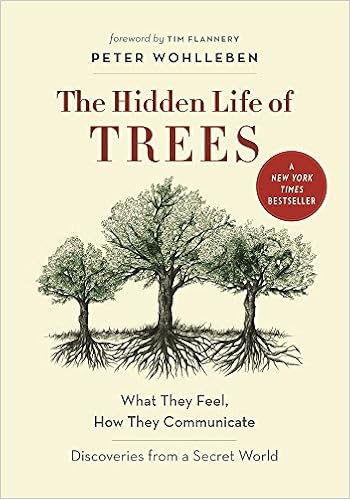
BOOKS: The Hidden Life of Trees by Peter Wohlleben


Unlike arborists, who care for significant trees in parks, gardens and public amenities, silviculturists look after the care and general health of commercial forests leading up to the time of harvest. Their skills are diverse but are informed by closely observing the changes in their arboreal charges, season by season, decade after decade.


Image result for the hidden life of trees


Much has been written about the art of growing and caring for trees. It is not a new genre and authors have approached the subject in many different ways. The author of this book is a German silviculturist of thirty years standing, although he unpretentiously describes himself simply as a forester.

The Germans, in particular, have always had a close relationship with their trees and forests and this has imbued much of their national culture and identity. This book steers away from Romantic mythology and concentrates on what makes wild and cultivated forest trees and their ecosystems so dynamic and wonderful.


This could have been a dull work, but the author brings his subject alive with good writing. Although clearly acquainted with the latest academic research on trees and forest ecosystems, Wohlleben successfully treads the narrow path between accessible language and technically informed detail with apparent ease.

“I thank you, dear reader, for having explored some of the trees’ secrets with me – only people who understand trees are capable of protecting them.”

Image result for Peter Wohlleben
Peter Wohlleben

Through the close examination of the tree species under his long-time charge in Germany (mostly beeches, oaks and conifers), Wohlleben observes how trees like to grow in natural forests. We learn how they communicate with each other through their roots (the ‘wood wide web’), and how ‘mother trees’ deliberately slow the development of their progeny so they don’t grow too quickly. We discover that these young plants ultimately develop stronger trunks and root systems this way which in time help guarantee a long life.

The author compares the slow start of forest trees to the specimens planted by gardeners in urban settings. These pampered root pruned plants – Wohlleben calls them ‘street kids’ - often grow well initially but never reach the size, strength and longevity of many of their wild cousins. Much of the book examines the many reasons for this.

Ultimately, Wohlleben makes a provocative appeal for humans to break down the barriers between the kingdom of animals and plants. Acknowledging that in recent decades we have begun to treat animals with more respect and dignity, he argues that this should be extended to trees. 

While anyone with an interest in the natural world will enjoy this fine work I think arborists and horticulture students will especially benefit from reading it as it helps the planter and carer of urban trees better understand the frailties of growing trees divorced from their wild kin.

The Hidden Life of Trees by Peter Wohlleben. 
Black Inc, $29.00 Paperback ISBN: 9781863958738

This review, by Silas Clifford-Smith, was first published on the Gardendrum website

Saturday, 1 October 2016

BOOKS: The House and Garden at Glenmore

In 2002 Viking published The Garden at Bronte. It was a ground breaking book that tells of the restoration of Leo Schofield’s Victorian-era garden in Sydney’s Eastern Suburbs during the 1990s. Schofield’s delightfully written volume showed how he, and others, had researched the history of the heritage property and how this informed the design of the restored garden. As well as the focus on the grounds Schofield’s book included interior shots of the house which highlighted his exquisite taste for decorating.  Although similar books had been published overseas The Garden at Bronte was the first of its kind in Australia and helped kick start a sub-genre of works on heritage garden and house restoration.


In similar vein comes The House and Garden at Glenmore by the Sydney interior designer Mickey Robertson. Robertson’s subject is her 1850s sandstone home - on the southwestern edge of Sydney - which she purchased with her husband in the late 1980s. For those familiar with the restoration genre - think Kevin McCloud’s Grand Designs – we see the transformation of the house from a rundown country property into a tastefully restored property, in this case, decorated in what I call the ‘Heritage-Modern’ style. Heritage-Modern homes are airy and light (think butler’s sinks, lime washed walls, toile curtains and antique wooden furniture) and have all the modern conveniences (which you never see) but honour and embrace the age of the property.

This book is divided into several sections. It begins with a memoir on the history of Robertson’s involvement with the property and shows how she restored and recreated Glenmore. While this was informative I felt there was only minimal detail on the many difficulties of doing such a major project. Most of Kevin McCloud’s programmes focus on this problematic period as it not only entertains but informs us whether the end result was truly successful. It would also have been interesting knowing more about the history of the house, its occupants and local memories of the property.

The second section focuses on the author’s interior designs. She is clearly a designer with great taste (not too feminine) and her interiors work well with the house if you embrace the Heritage-Modern look. I particularly liked the colour schemes and the diverse and interesting textiles used throughout the house which made it look very livable.

The third section looks at the garden. Almost all the images show the grounds today and the end result is very much in the Gardens Illustrated style (heritage vegetables, jute, gum boots, bamboo canes and potted bulbs – you know the look). The area of Sydney where Glenmore is located gets light frosts, hot summers and below average rainfall. The owners should be commended for keeping these harsh conditions in mind as the garden was planted out.

Without doubt the most dramatic plantings are a group of mature glaucous grey Agave Americana planted at the front of the house. These slow growing majestic succulents were relocated from Denbigh, a nearby heritage property. It would have been great to see photos of the removal and replanting of these dramatic plants and some images of the gardeners at work. 

I’m sure this beautiful volume - with lovely photos by Daniel Shipp - will appeal to many who drool at the idea of owning and restoring an old house with land. I look forward to viewing the property one day and congratulating the owners in person on doing such a fine job.

The House and Garden at Glenmore by Mickey Robertson ISBN: 9781743365823
Hardback $59.99 RRP Murdoch Books

Saturday, 3 September 2016

Your Garden

I was saddened to hear the news that Your Garden magazine is going to fold. While it is disappointing to see any title go it is especially true of Your Garden which has the distinguished honour of being Australia's longest running gardening title. 


Your Garden was first published in 1947 under the editorship of Ernest E Lord. The 1940s, 50s and early 60s were the peak years of interest in gardening and with the post war housing boom and increased population the magazine prospered.  The title actively promoted the use of native plants in home gardens as well as growing orchids and other ornamentals. The publication was general in nature and reflected the diverse horticultural interests of amateur and professional gardeners.

The title had an impressive list of contributors during its lifetime, including (among others): Winifred Bristow, Phil Dudman, Rodger Elliot, Jean Galbraith, Kevin Heinze, Arno King, J N Rentoul and Arthur Swaby. As well as excellent articles Your Garden was attractive to look at and also included gardening themed cartoons - something unheard of in contemporary garden mags.


By the 1990s and the new century the magazine was in slow decline. The readership was ageing and the publishers made little attempt to appeal to younger readers. While Your Garden had seen off several other titles during its boom years it couldn't compete with new (and arguably) fresher journals such as Gardening Australia and Better Homes and Gardens which had companion TV shows.  In recent years the magazine has moved from being a monthly to a seasonal publication. I wish the current writers and production staff well.

Thursday, 1 September 2016

Sage Advice - Anne Wareham

"Gardening is boring. It is repetitious, repetitive and mind-blowingly boring, just like housework. All of it – sowing seeds, mowing, cutting hedges, potting up, propagating – is boring, and all of it requires doing over and over again. if there are enjoyable jobs they're mostly enjoyable for the result not the process."

Anne Wareham writing in The Bad Tempered Gardener (2011)


Anne Wareham (image courtesy telegraph.co.uk)

Tuesday, 2 August 2016

Lord Howe Island

Despite its immense size Australia has surprisingly few islands off its coastline when compared to other large landmasses. One of the most distinctive is Lord Howe Island, 580 km off the northern New South Wales coast. A small crescent-shaped volcanic remnant, the 9 km long island is dominated by the dramatic twin peaks of Mt Lidgbird (777 m) and Mt Gower (875 m).


The twin peaks of Mt Lidgbird and Mt Gower at the southern end of Lord Howe Island

Depending on the time of year Lord Howe is home to between 250 and 700 permanent residents and tourists as well as a diverse and distinctive range of flora and fauna. The island was first discovered in 1788 by the HMS Supply under the command of Lieutenant Henry Lidgbird Ball. This was the island's first human contact but permanent settlement did not begin until 1834.  The island is named after Richard Howe who was the First Admiral of the Royal Navy at the time of its discovery.

Flying into Lord Howe from the mainland is one of the most exciting air journeys you can ever do. After crossing over seemingly endless water you suddenly spot the island jutting out of the ocean. After a picturesque reconnaissance circuit the Qantas Dash 8 prop plane descends and comes to a dramatic halt on the tiny 900 metre runway in the middle of the island.


Qantas regularly flies to the island from Sydney and Brisbane

The flora of this small island is a mixture of native and exotic plants growing in a dramatic coastal setting. Unlike almost everywhere else in Australia you won’t find the usual types of dry sclerophyll flora here. Instead Lord Howe offers the visitor a cocktail of unique endemic vegetation (105 of the 243 species of natives on Lord Howe are limited to the island), South Pacific regional coastal flora and tough-as-old-boots international horticulture standards.

The most common endemic plant growing on the island is the kentia palm (Howea forsteriana) which is a grown as an elegant indoor plant internationally. They're everywhere, from formal plantations as well as wild in the fertile valleys of the uncultivated lower parts of the island. The kentia is just one of four indigenous palms found here. Other distinctive locals are the berrywood (Ochrosia elliptica), an attractive glossy leaf small tree and the wedding lily (Dietes robinsoniana).


The largest bloom of the genus, the wedding lily, Dietes robinsoniana, flowers in late winter and spring

Sadly, not all is perfect in paradise. The island would have been pristine when humans first arrived, but it did not take long for decay to set in. Goats and pigs were introduced as a food source and they soon went feral defoliating many plants. Not long after mice and cats turned up, and early last century black rats swam to the island from a beached ship. The rodents decimated thousands of native birds, insects and plants leading to mass extinctions and endangering the populations of many others.

While many of the animal pests have been removed or controlled the rats are a persistent problem. The small community and its administration – the Lord Howe Island Board – are evenly divided over what should be done to control them. Some conservationists want a one-off mass extermination of the rats by aerial bombing while many residents feel this is unnecessary and dangerous. In 2015 the islanders voted on the proposal in a referendum with the extermination option winning by a small majority.


Kikuyu grass is one of the most common weeds on the island

The introduction of kikuyu grass has also been disastrous for small birds and animals. When regularly mown this African pasture turf is ideal for a frost free warm temperate climate but when not trimmed it becomes a dense jungle undergrowth which is almost impenetrable to small birds and animals.Weeds such as bitou bush, cherry guava and asparagus are a major issue here too. Luckily there's no evidence of lantana and blackberry. 


Whether wild or cultivated the kentia palm is found
growing throughout much of the island


Lord Howe Island is not a backpacker’s destination as it's expensive. You have to have booked accommodation to visit, there's no camping, and the flight from Sydney, Port Macquarie and Brisbane is pricey. Fruit, vegetables, groceries and drinks are costly because everything comes to the island by ship or plane. So if you visit try to squirrel as many supplies into your luggage as possible. 

Despite its many problems, this World Heritage listed island remains a real paradise on earth. Every corner of the island is gorgeous and the locals are very friendly. Beach lovers will think they've died and gone to heaven, but so will enthusiasts of plants, birds and conservation.


words and images © Silas Clifford-Smith

Monday, 1 August 2016

Sage Advice - William Robinson

"One of the first things the lover of flower gardening should do is to get a clear idea of the distinction between gardening and botany. Gardening is an inexhaustible art; botany is a world science, and the great mistake is to consider gardening from the point of view of the botanist."

William Robinson, writing in the Preface of the 1934 edition of The English Flower Garden


Image of William Robinson courtesy of telegraph.co.uk

Thursday, 14 July 2016

Sage Advice - Margery Fish

"I could go on and on. But that is just what gardening is, going on and on. "

Margery Fish We Made a Garden (1956)


Thursday, 16 June 2016

Sage Advice - Beverley Nichols

"By no means all of my friends are gardeners and I never say to people 'would you like to look at the garden?' because any lover of gardens, even if he sees only a lawn and a solitary herbaceous border, will ask to see it himself."


Beverley Nichols (1898-1983) writing in Down the Garden Path (1932)

Tuesday, 8 March 2016

Floral Clocks

The floral clock—once a popular garden feature—has largely escaped the attention of garden historians, but it is high time these quirky timepieces were reassessed.

1970s English comic postcard with a floral clock theme
Art work by Brian Perry for Bamforth & Co


One of the horticultural oddities of the last century is the floral clock. Most of us have encountered them from time to time during our travels, often sighted on gentle slopes in manicured public gardens at tourist destinations. Apart from a moment’s thought at the sophistication of the technology and the intricate plantings used by the designers, most of these outdoor landscapes are soon forgotten. As a working gardener I’ve had a fascination with these quirky garden features throughout much of my working life. Not only are they a reflection of the design and propagation skills of their creators but they also express the civic pride and wealth of the community in which they are located.

Floral clocks are found throughout the world but usually within temperate latitudes within societies which can afford the high cost of upkeep. Hotspots for these horologically functional novelties include North America, Europe, Australia, and New Zealand. But floral clocks of one form or another can be found in other areas of the world too—I know of examples in India, China, and Japan, and recently stumbled on one in the Cambodian capital Phnom Penh, hardly a city we connect with municipal prosperity.

While mostly associated with twentieth-century landscape design practice, floral clocks have a history that dates back to the eighteenth century (and even earlier if their horological cousin the sundial is included). The celebrated eighteenth-century Swedish naturalist Carl Linnaeus was, for example, obsessed with the possibilities of creating a botanical clock, known as a Horologe or Watch of Flora, made up of 46 different flowering plants which opened and closed as the day progressed, thus informing the viewer of the time of day.


The Swedish botanist Linnaeus proposed the
 idea for a clock made out of living plants
image from author's postcard collection

Linnaeus’s plan seems solely an intellectual fancy restricted to observations of the habits of individual plants, and to the best of our knowledge his clock was never constructed. Despite this, his research in Uppsala found a reflective audience over the following decades and ‘dial plants’ were sometimes grown in botanical collections. The early nineteenth-century British gardening authority J.C. Loudon, for instance, listed a number of dial plants suitable for the purpose in his influential Encyclopaedia of Gardening (1822).

During the nineteenth century, floral or carpet bedding became increasingly popular and gardeners experimented in constructing intricate designs combining brightly coloured plants sourced from around the world. Reflecting the tastes of the time, gardeners tried to make plants look like something else. While many such bedding designs were laid out in private gardens the increasing establishment of public parks saw these skills transferred into a civic setting.

While carpet bedding began to loose popularity in the late nineteenth century there was clearly an interest to use the skills learnt in ‘bedding-out’ in a new modern way. Reflecting the advances in technology it is not surprising that someone would eventually build an outdoor clock decorated with living plants, with the time being articulated by machine (clock hands) rather than by the plants themselves.

The earliest known example of a floral clock was the l’horloge fleurie created by a French horticulturist named Debert in the Trocadéro gardens in Paris (1892). Not long after, another was constructed across the Atlantic at Water Works Park, Detroit (1893) and a decade later the still-extant clock at West Princes Street Gardens, Edinburgh (1903). Another significant early example was the giant clock created for the 1904 World’s Fair in St Louis, Missouri. Other early floral clocks were also constructed in Le Mans, Interlaken, and Budapest as well as elsewhere in Europe.

After the first wave of interest in floral clocks some of these were abandoned due to the upheavals of the Great War, but during the 1920s and 1930s interest in the concept returned. With the increasing popularity of the motor car many towns constructed floral clocks as tourist attractions and many new floral clocks were constructed in English coastal towns.


Edinburgh's famous floral clock in 1958

Floral clocks came on the scene at the same time as the fashion for postcard collecting so it comes as no surprise that these gardens would become a popular subject. Thanks to the popularity of postcard collecting we have a record of nearly all of them, and as plantings changed each year these postcard views offer a revealing record of changing design approaches. The best-known example of this chronological record is of the Edinburgh floral clock, photographed by postcard sellers most years since 1903. Designs used for this high-profile example have celebrated royal celebrations and civic achievements as well as anniversaries of significant local worthies.

The first floral clock in Australia was built in Sydney’s Taronga Zoo in 1928 and since that time it has been a popular landmark destination. In 1930 a clock was built at the Royal Agricultural Showground in Melbourne. This example was constructed at the height of the Great Depression and the mechanism was made out of scrap parts, a thrifty showpiece which was a popular curio at the showground for many years. Following the construction of the large clock in Melbourne’s King’s Domain, however, the Showground dial lost its uniqueness and was later removed.


The former floral clock at the Melbourne Show Ground

As someone who has planted out formal annual beds I am in awe of the skill of the gardeners who plant-out the dials of these clocks. While some modern dials are decorated with mass plantings and coloured gravels, the true floral clock is decorated with thousands of tiny individual plants that have been raised from seed prior to planting out.

Many of the locations of the early clocks were found in temperate climates with cold winters. Therefore the annual planting-out of the dial face only occurred in spring, after the end of the cold weather, as many of the plants were frost tender. Plant selection was important but with the large range of plants imported from around the world designers have had a large range of plants from which to choose.

Succulents are a popular choice in many floral clock planting schemes. Hardy sedum and sempervivum are desirable as they are easy to propagate, diminutive in size, and come in a large range of colours. Less hardy choices include the larger-sized echeveria and agave. While there are many suitable non-succulent plants, popular choices include alternanthera, lobelia, alyssum, senecio, coleus, iberis, feverfew (Tanacetum parthenium), and salvia.

While most landscape themes have been well studied it is slightly surprising that garden historians have written little about these highly distinctive, much viewed landscapes. It is hard to explain such historical neglect as carpet bedding has been well documented and analysed. But perhaps these quirky landscapes have been perceived in some quarters as a form of horticultural kitsch, reflective of an earlier artistic aesthetic. But like the recent interest in garden gnomes—now sanctioned by Chelsea Flower Show—there is hope for a revival of interest in these intricate, technologically inspired, floral landscapes.

Listen to Silas Clifford-Smith talking about floral clocks with Michael Williams on ABC Radio National's Blue Print for Living programme (aired on 5th March 2016) http://www.abc.net.au/radionational/programs/blueprintforliving/the-folly-of-the-floral-clock/7210984

This article was first published as 'Floral Clocks: Civic Pride of Horticultural Kitsch' in the July-September 2014 issue of Australian Garden History (the journal of the Australian Garden History Society). This issue is available online at the AGHS website.
Related Posts Plugin for WordPress, Blogger...